Wildfire safety that works before evacuation orders do.
Timeline
~4 months
Role
Co-founder, Developer, Designer
Team
Kush, Heidi, Alejandro
Tools
iOS, SwiftUI, Firebase, NASA API, Hardware
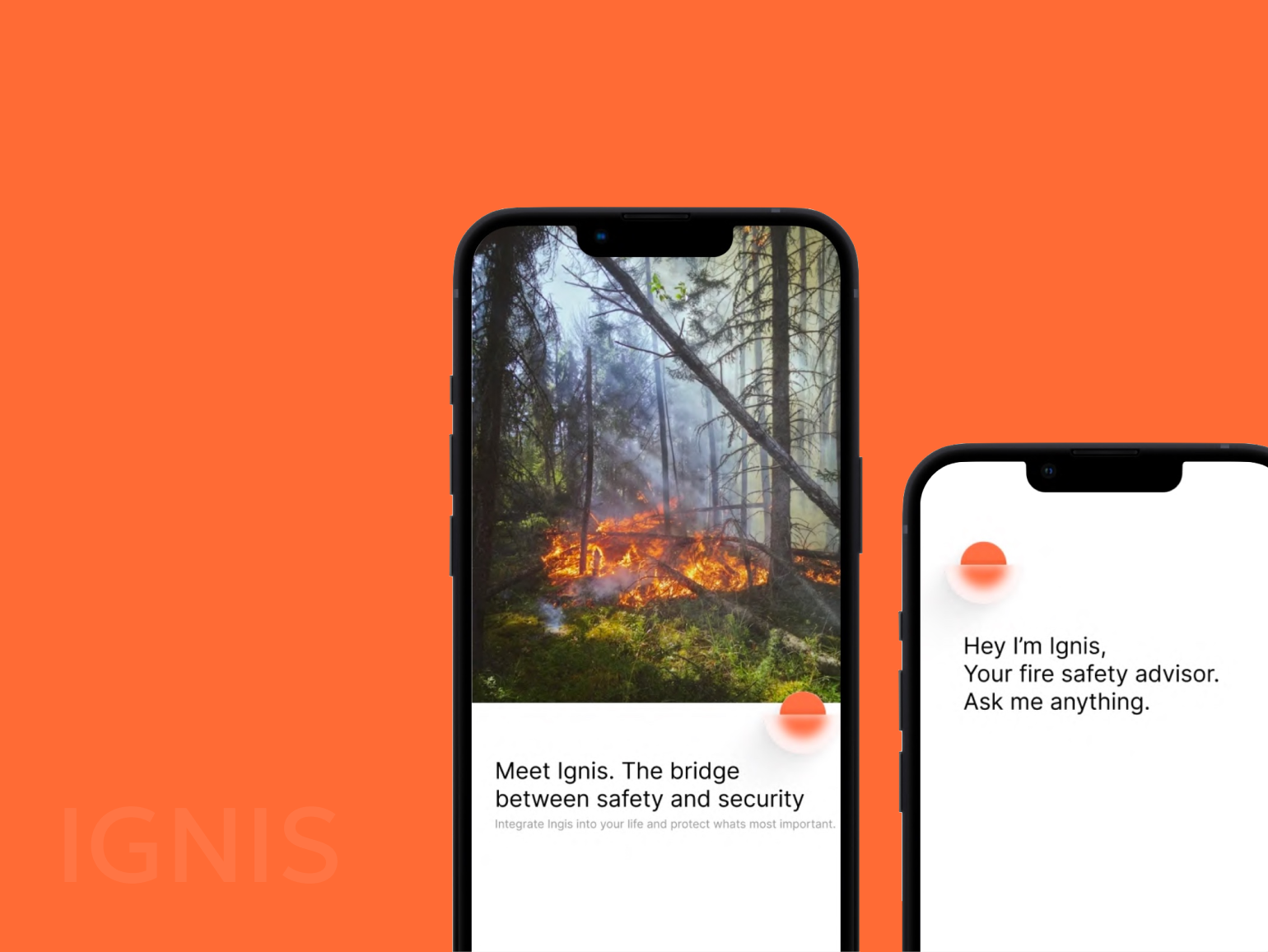
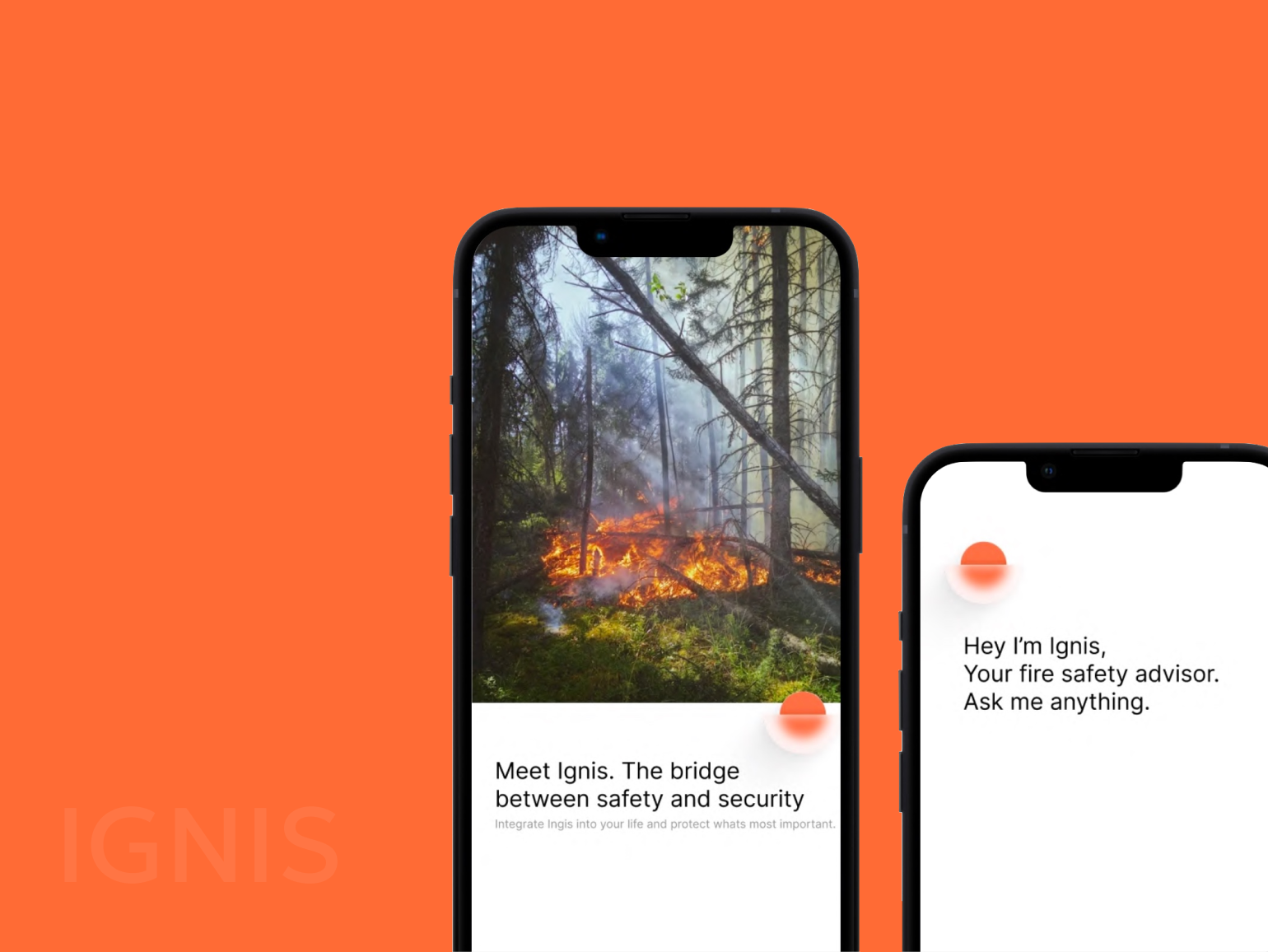
Ignis is a native iOS app that uses NASA's FIRMS satellite data to detect wildfires and alert users up to 22 hours before official evacuation orders are issued.
Background
Ignis started as a Congressional App Challenge submission and became something much bigger. What began as a high school project ended up being recognized by NASA and NOAA, and taught me more about building real, technically complex software than anything I had done before. It was the first taste I had of what it meant to have a "startup" project.
The Problem
Official evacuation orders give people roughly 24 hours notice before a wildfire reaches them. For families spread across multiple locations, a primary home, elderly parents, a rental property, that is not enough time to locate everyone, execute a plan, and get out safely. The data to do better already existed. NASA satellites detect active fires in near real time. Nobody had connected that data directly to the people in a fire's path in a way that was personal, location-aware, and actually actionable.
26%
of households have a fire safety plan
2.6M
People Affected by Wildfires (1998-2017)
The Solution
Ignis is a native iOS app that pulls from NASA's FIRMS satellite API to detect active fires and alert users up to 22 hours before official evacuation orders are issued. Users add any location they care about, their own home, a family member's house, a rental property across the country. Each location receives a real-time threat score based on a custom fire propagation algorithm built from scratch. The app also lets families create, customize, and share a wildfire safety plan. An AI assistant helps users generate a plan tailored to their specific property and situation so they can act fast when every second counts.
The Algorithm
We built a vector-based fire spread model that works in three stages. First, a function analyzes fire movement by creating a 2-mile detection radius around each known fire location and checking for new hotspots within range. When movement is detected, it calculates the distance between old and new fire positions and projects a directional vector 100 miles forward. A cone with a 40-mile radius and 100-mile height is then formed, aligned to the vector's angle to encompass the potential spread zone. Finally, each saved user address is checked for inclusion in the cone and assigned a risk percentage based on its distance from the tip. The closer to the tip, the higher the risk.
Key Features
Real-time fire alerts triggered within 2 hours of NASA satellite detection. Tiered threat notifications at yellow, orange, and red levels based on proximity. Support for monitoring multiple homes simultaneously. Family safety plan builder with AI-generated customization. myCircle, a community feature using FindMy network integration to track family members' locations relative to active fires. Quarterly reminders to update safety plans.
Tech Stack
Frontend: Swift, SwiftUI, UIKit, MapKit Backend: Python, Google Cloud Functions Database: Firebase Firestore, Firebase Realtime Data Source: NASA FIRMS API, VIIRS NOAA-20 Satellite Other: CoreLocation, Foundation
Outcome
Ignis was awarded the Congressional App Challenge. The project was then advanced further and recognized by NASA during a UF Product Innovation Challenge where hardware was implemented.